

Elevating Property Profiles: The Impact of Professional Videography in Real Estate
In an era where the digital marketplace reigns supreme, the real estate industry is no exception to the transformative power of technology. Among the myriad of advancements, professional videography stands out as a pivotal tool for real estate professionals and property sellers alike.

In an era where the digital marketplace reigns supreme, the real estate industry is no exception to the transformative power of technology. Among the myriad of advancements, professional videography stands out as a pivotal tool for real estate professionals and property sellers alike. This dynamic medium transcends traditional boundaries, offering a comprehensive and immersive viewing experience that photos and text descriptions simply cannot match. This article hosted by photographer and videographer Miles Bergsma delves into the multifaceted benefits of professional videography in real estate, underscoring its significance in today's competitive market.
Enhancing Online Presence
In the digital age, a strong online presence is crucial for success in real estate. Professional videography elevates property listings, making them more engaging and visually appealing to potential buyers. Videos allow for a seamless virtual tour of the property, providing a realistic sense of space and layout that photos alone cannot convey. This enhancement of online listings not only attracts more viewers but also increases the time spent on each listing, significantly boosting its visibility and appeal.
Capturing Emotional Connections
Buying a home is as much an emotional decision as it is a financial one. Professional videography excels in capturing the essence and atmosphere of a property, creating an emotional connection with viewers. Through cinematic techniques and storytelling, videographers can highlight unique features and evoke feelings of warmth, comfort, or luxury. This emotional engagement is key to transforming interest into action, encouraging potential buyers to take the next step in the purchasing process.
Increasing Market Reach
The shareability of video content on social media and other digital platforms significantly extends the reach of real estate listings. A professionally produced video is more likely to be shared, liked, and commented on, thereby increasing its visibility beyond the initial audience. This expanded reach not only targets local buyers but also attracts interest from national and international markets, opening up a broader spectrum of potential buyers.
Showcasing Property Features
Professional videography provides the unique opportunity to showcase a property's features in their entirety. Unlike static images, video tours can highlight movement and flow within the home, such as the interaction between living spaces or the transition from indoors to outdoors. Special features like swimming pools, landscaped gardens, and panoramic views can be presented in their full glory, offering a comprehensive view that engages and impresses potential buyers.
Time and Cost Efficiency
The efficiency of professional videography cannot be overstated. By providing a detailed and immersive viewing experience, video tours can reduce the number of unnecessary physical showings, saving time and resources for both real estate professionals and sellers. Furthermore, the longevity and reusable nature of video content present a cost-effective marketing tool, adaptable to various platforms and campaigns.
Competitive Advantage
In a crowded market, differentiation is key to standing out. Properties featured with professional videography inherently possess a competitive advantage, showcasing a commitment to quality and attention to detail. This level of professionalism not only elevates the property's profile but also enhances the reputation of the real estate agent or seller, signaling a dedication to providing the best possible presentation and service.
Maximizing Exposure with Adobe Express: Showcasing Your Real Estate Video
In the realm of real estate videography, creating the video is only the first step. The true potential of your content is realized through effective showcasing and distribution. Adobe Express emerges as a powerful ally in this phase, offering versatile tools to ensure your video reaches its intended audience with maximum impact. Here's how you can leverage Adobe Express to present your real estate masterpiece:
Converting to MP4: Easily convert your real estate videos to the universally compatible MP4 format, ensuring they can be viewed on any device. This step is essential for making your videos accessible and ready for distribution across multiple platforms.
Updating Your Website: Adobe Express facilitates the embedding of your video directly into your real estate website, enhancing the visitor experience. A video on your homepage or property listing pages can significantly increase engagement and interest from potential buyers.
Creating Thumbnails for Promotion: With Adobe Express, create captivating thumbnails for your video, essential for grabbing attention when shared on listing sites or digital advertisements. A compelling thumbnail can make the difference in whether a prospective buyer clicks to view your property video.
Generating QR Codes: Adobe Express can generate QR codes that link directly to your video, perfect for including in printed brochures, flyers, or business cards. This bridges the gap between offline and online marketing, allowing potential buyers to access your video tour instantly from their mobile devices.

The adoption of professional videography in real estate is more than a trend; it's a strategic investment in the future of property marketing. Its ability to enhance online presence, connect emotionally with buyers, increase market reach, showcase property features, and offer time and cost efficiency provides a clear competitive edge. In an industry where first impressions are everything, professional videography ensures that every property is presented in its best light, maximizing its potential in the digital marketplace.
Unlock the potential of your next project with Miles Bergsma's creative vision. Reach out today to explore how expert videography can transform your story into a visual masterpiece.

Introduction to Web3; Spokane's future on the Blockchain
What is Web 3.0 ?
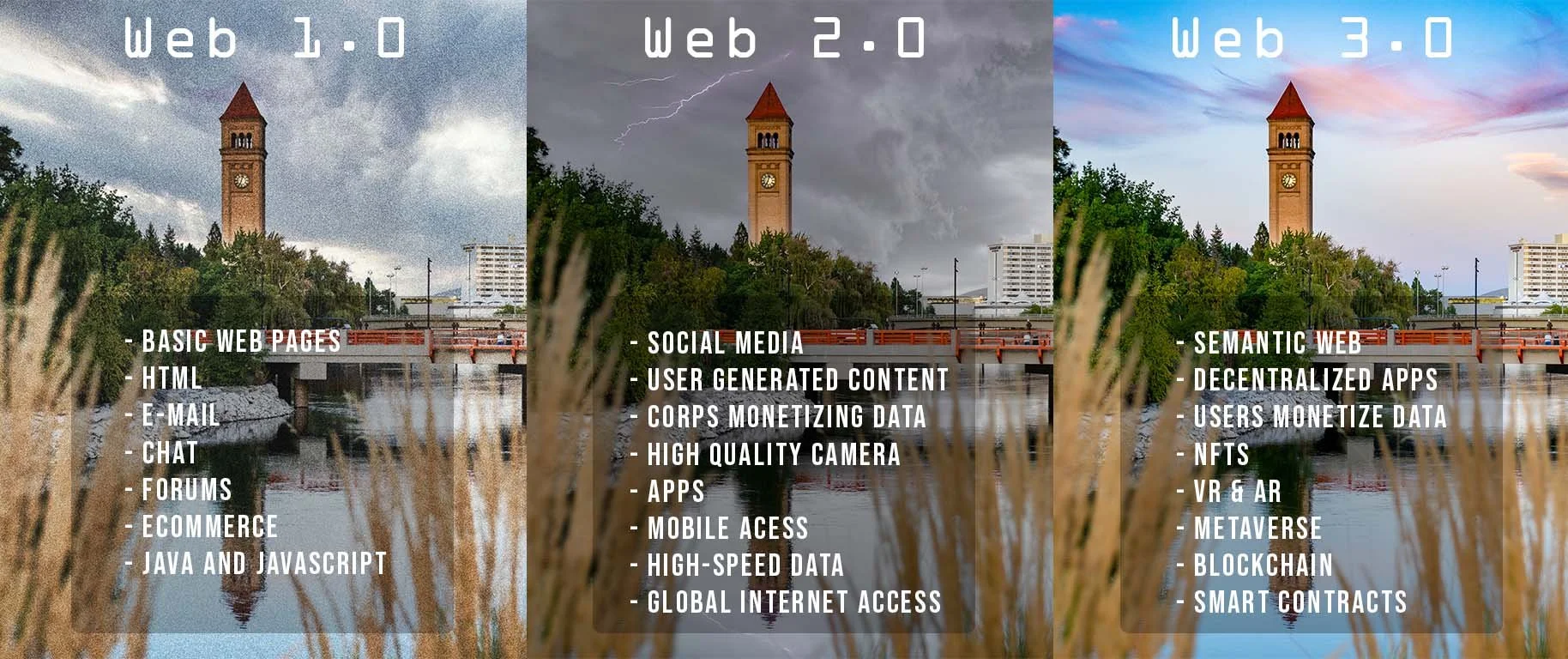
Web3 the next generation of the World Wide Web, based on blockchain technology. This concept focuses on removing power from big tech companies and focuses on decentralized computing. The contrast is the age we currently live in, known as Web 2.0, where our information is kept and stored on servers, owned by a group of companies referred to as “Big Tech.” It is widely known the hazards of algorithm based AI and it’s influence on the delicate fabric of society, so many are embracing a new improved Web 3.0 for the future.
The current Web2 model includes a myriad of pitfalls that were engineered by capitalism, misinformation, artificial intelligence, and rapidly evolving technology. Web2’s functionality is built heavily from the financial backbone of eCommerce and social media. As it currently stands, the basic model in Web2 forces any user to “pay the middle man” in order to utilize any service. Looking to sell an item? Pay a fee % to Amazon. Looking to transfer money? Pay a fee % to Venmo. Looking to book a flight? Pay a fee % to Orbitz. This is because these services are centralized and owned by “Big Tech” companies. These big tech companies also have a heavy hand in social media algorithms that can persuade or dissuade a specific demographic with the turn of a dial.
Web3.0 cuts out this middle man and provides a more intelligent and efficient delivery of service, without fees that are dictated by the network owner. The only cost involved would be the cost to process the transaction on the blockchain. Imagine you want to book a flight, rent a car, get a hotel room, and plan a trip full of excursions. Rather than spending hours upon hours of researching and comparing rates, Web3.0 would simply deliver to you the best available rates based on your list of requirements. Because there is no middle-man trying to market and coerce you into purchasing things you didn’t ask for, it delivers the best possible product instantaneously.
What is Blockchain?
The blockchain, simply put, is a digital ledger of all transactions across a peer-to-peer network. This data is stored in “blocks” that are chained together chronology, and typically have complete transparency to the public. While the inter workings blockchain technology are vast and ever rapidly expanding, blockchain should be viewed as nothing more than a new type of software. A network of computers across the world, processing transactions as a collective whole, rather than the data being owned by a centralized server. This software is the backbone to the Web3.0 infrastructure, which facilitates cryptocurrency, smart contracts, supply chain, decentralized financing, and most recently, decentralized gaming.
Adoption of blockchain technology has been slow in some sectors, as is most new technology that is unfamiliar to society. Remember when text messaging came out? Your disgruntled uncle probably refuted; “why would I text someone when I could just call them, that’s stupid.” Remember when Apps came out? We all joked about “is there an app for that,” and now apps literally run every facet of our life. Web1.0, E-Mail, MP3s, Napster, MySpace, TikTok.. all considered “fads” that ultimately revolutionized humanity as we know it. Add Blockchain to that list. If you don’t believe me, you should understand that world’s top executives and developers have all left their high-paying jobs at “big tech” to work on Web3.0, for the greater good of humanity, not money.
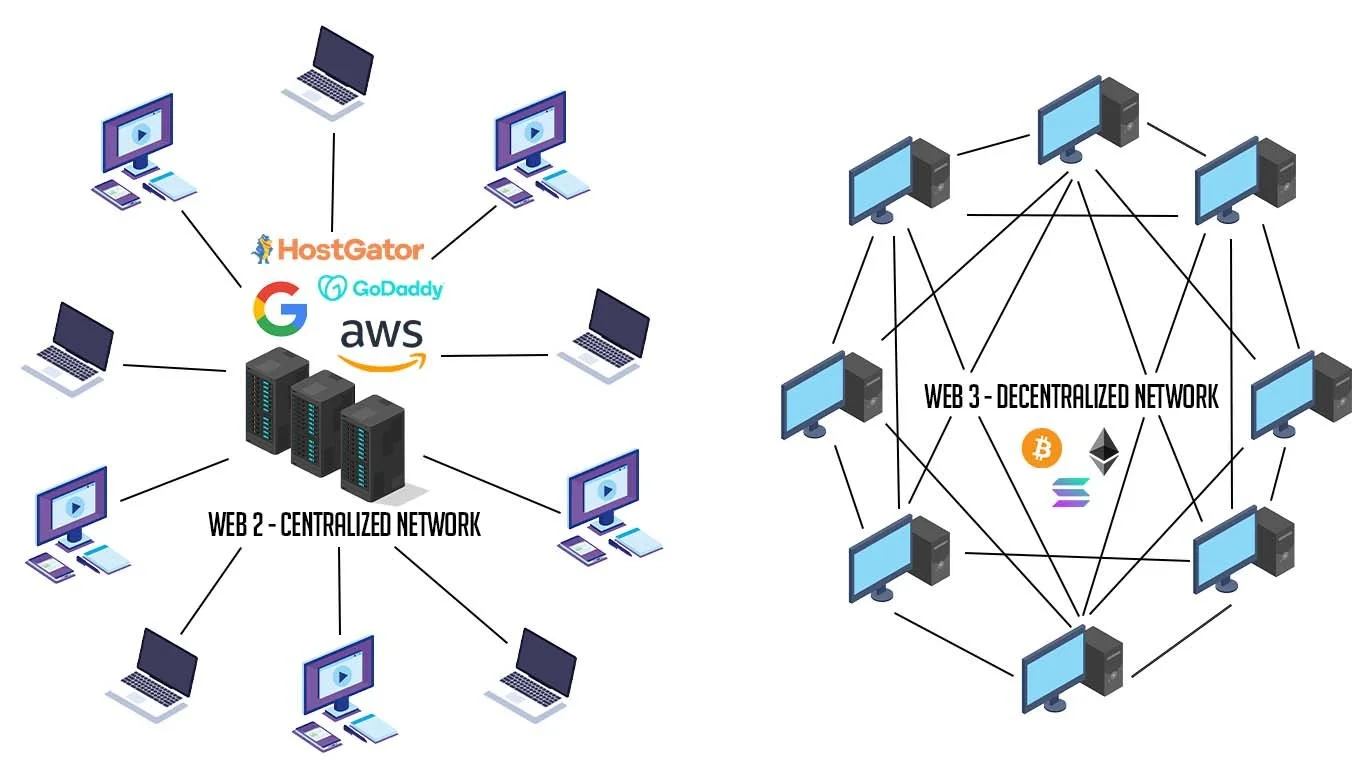
This model shows how web2 data is owned and regulated by “big tech,” while decentralized network’s redundency provides security, stability, and puts ownership in the hands of the users.
What is Cryptocurrency?
Cryptocurrency is a digital currency or used as a medium of exchange through the blockchain network. Cryptocurrency does not rely on any central authority, government or bank to uphold or maintain it. There are several different cryptocurrencies working on different blockchains, each with their own respective “coin.” For example, the Ethereum coin powers the Ethereum network, while the Solana coin powers the Solana network, and so on. Whenever a transaction is processed on a blockchain network, it utilizes a small portion of it’s proprietary cryptocurrency, known as the “gas”. This is tantamount to paying a fee to a middle-man, however the middle-man is an anonymous volunteer processing the transaction on the network. This middle-man is actually known as a “miner” - any computer on the network that is willing to process that transaction in exchange for a small percentage of cryptocurrency.
“Bitcoin Mining” is a term that many are familiar with, and often comes with negative connotations due to environmental concerns. The blockchain relies on volunteers (miners) around the world to process transactions, by leaving their computers and processors on 24/7. The energy consumption related to this has created great concern among environmental activists, considering cryptocurrency mining the “wild west.” Many miners set up large scale mining operations in area that offer cheap electricity. The pros and cons of bitcoin mining is an interesting debate, as regulation is inevitable. However, the insidious nature of Big Tech’s ability to bypass and skirt around environmental laws is somewhat laughable in the face of this argument. Blockchain visioneers are actively working on more efficient systems, such as the Proof of Stake protocol that uses a fraction of the energy used in traditional mining.

Google can afford to buy the highest end equipment and bypass environmental laws because they have succesfully monetized their user’s data.
What is Bitcoin?
Bitcoin was the first decentralized digital currency, created in 2009. This encrypted ledger was designed and implemented as a way for people to send money over the internet. The intention was to provide an alternative payment system that would operate free of central control or traditional banking fees. There is a limit supply of 21,000,000 bitcoin that will ever be released into circulation. Unlike traditional Fiat money, which is printed and issued by the government, bitcoin negated much of the pain involved with traditional currency. Fiat money needs an intermediary such as a central bank, which results in international transactions taking several days to process and costing inordinate amounts.
What is Ethereum?
Ethereum is the second most popular cryptocurrency and blockchain network. The ethereum blockchain prevailed as next leading cryptocurrency when massive leaps were taken in standardizing ERC smart contracts, which allowed the creation of the first Non-Fungible Tokens, NFTs. The first ERC-721 smart contract in 2017 resulted in an Ethereum-based game in which you could buy, sell, and breed collectible digital cats, called CryptoKitties. ERC standards have led to many revolutionary steps in blockchain utility, making the ethereum network the busiest blockchain network in existance.
What is a Smart Contract?
A smart contract is a small snippet of code designed to interact with other smart contracts and nodes on the blockchain. Smart contracts are written in a variety of programming languages, and stored on the blockchain with full transparency so they can be inspected to verify its functionality. Smart contracts act as an intermediary between nodes (computers on the network), to verify and automate virtually any kind of exchange, no matter how complex.
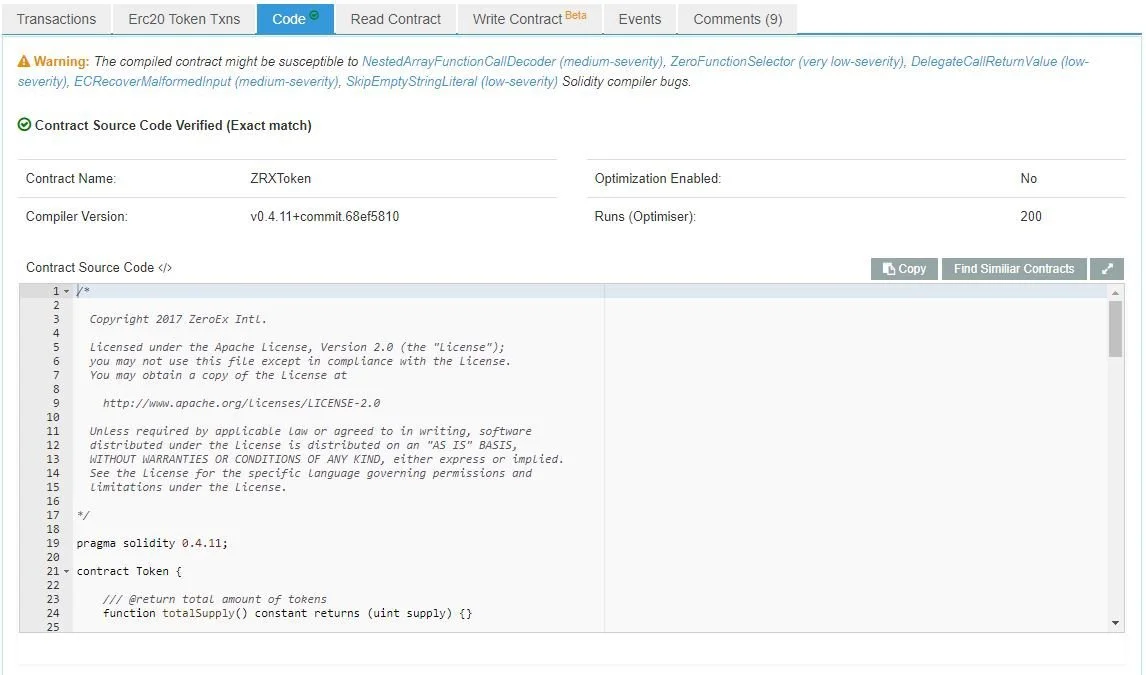
Example of a smart contract being inspected and verified.
What is an NFT?
The term “Non-Fungible Token” (NFT) is fancy talk for a digital asset that is unique and can not be modified. It shows proof of authorship, and ownership, while having a digital ledger visible to the public of its recent transaction value. The best real-world example would be taking a collectible baseball card in to have it graded and sealed away in a plastic case, never to be opened again. The process of creating an NFT on the blockchain is called “minting”, similar to when the PSA grades and “mints” a collectible baseball card, or when a treasury “mints” a new coin. In order to mint an NFT, you must pay gas fees on the respective network. An NFT can be any digital medium; JPG, MP3, MP4, metadata, etc.
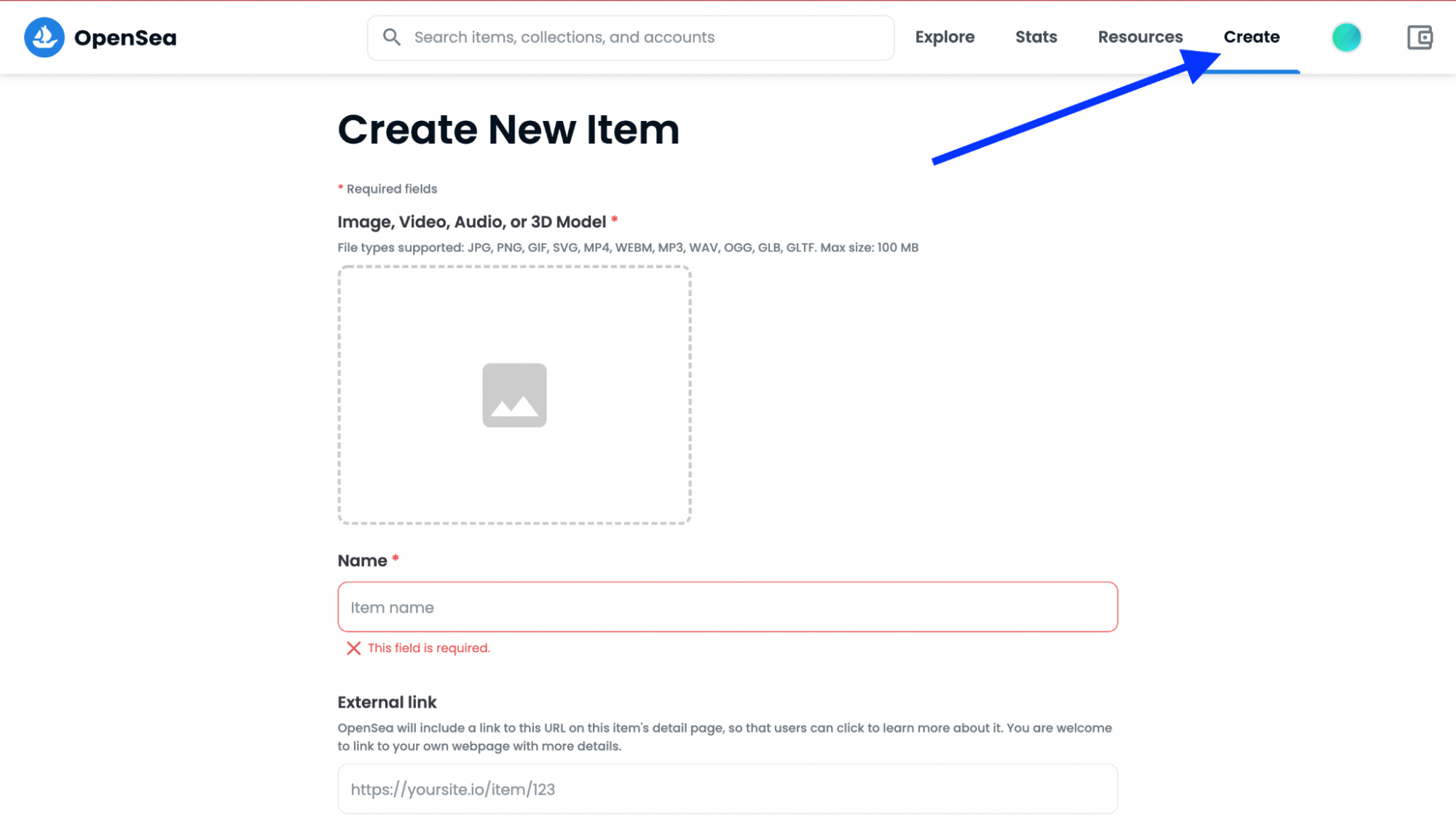
The price and transaction history of all NFTs are visible to the public, which creates an interesting economic standard in which there is no concealing margins. Show me a sports card store that shows what they paid for each unit and is fully transparent on all their profits. This is a failing business model and would never happen in the real world. This is why NFTs can be considered a digital store of currency, similar to old world physical assets such as gold and silver. Recent advancements in the metadata being written into NFT smart contracts, allows interactions to provide real world utility and residual income models.
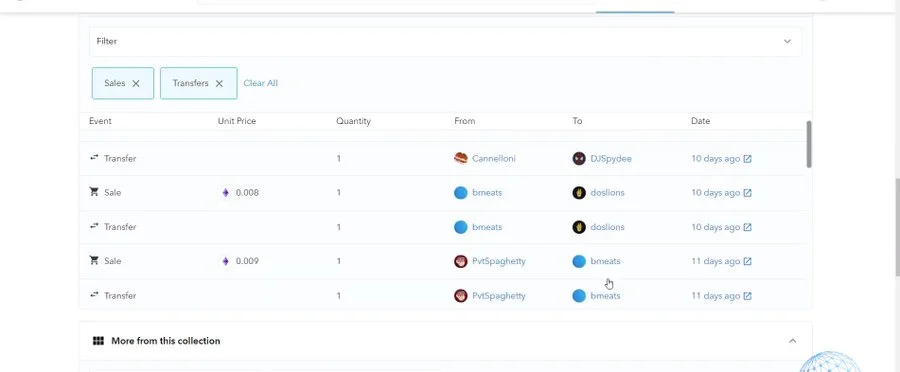
The transaction history of an NFT is transparent to the public.
A good example of utility within NFTs is stepn.com, a web3 lifestyle app with gaming and social elements. Players can earn cryptocurrency by walking, jogging, or running outdoors. You must first invest into a digital “NFT Sneaker”, all of which have a different set of attributes. Some sneakers might yield more kickback, while other sneakers may last longer without needing upkeep. Level up and improve your sneakers for more effeciency, or sell your NFT sneaker for huge profits when you’re done maximize it’s usage.
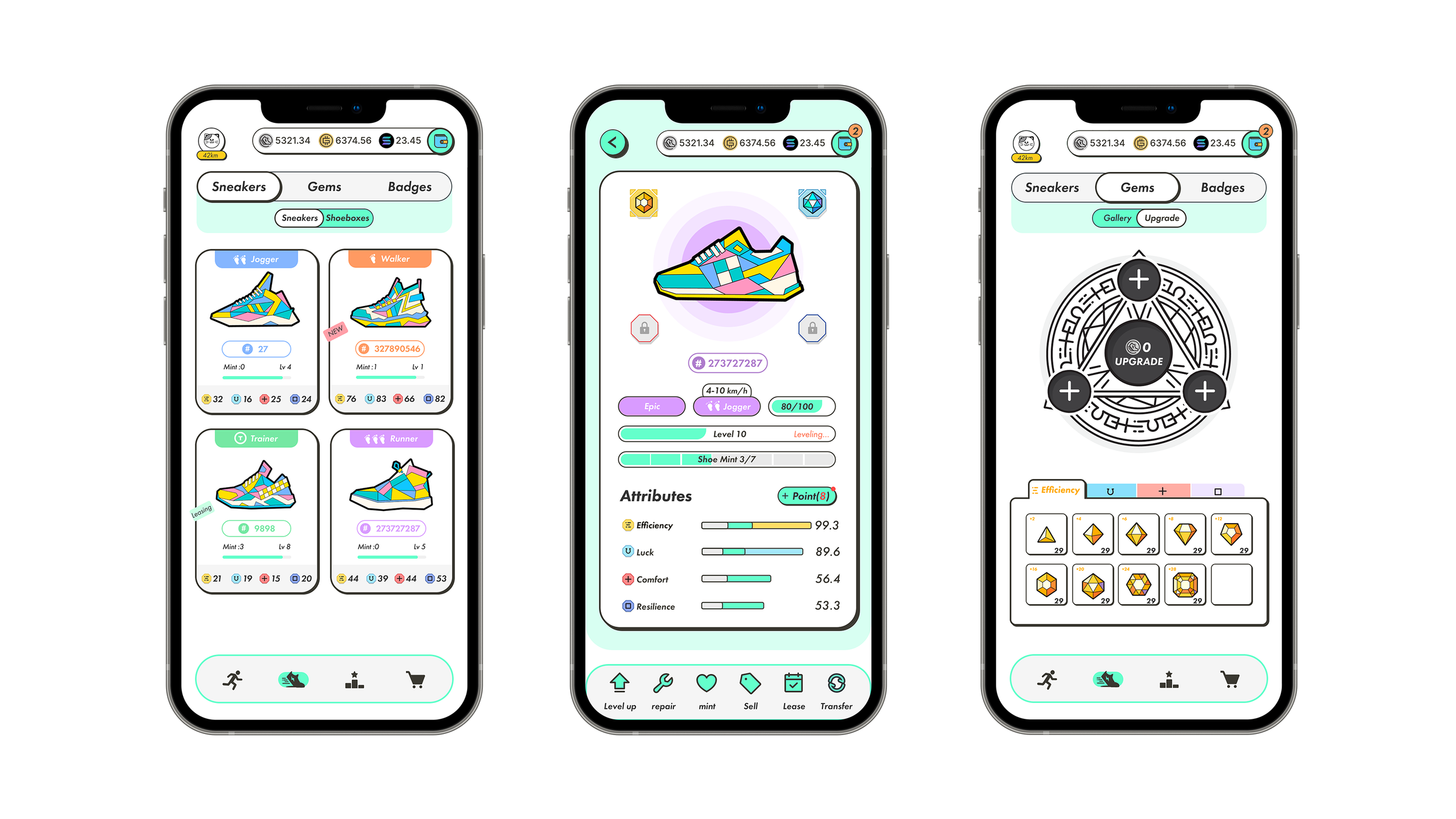
stepn.com is a great example of one of the first play-to-earn NFT based lifestyle apps.
What is a wallet?
A web3 wallet is essentially a digital wallet in which you can store cryptocurrency and NFTs. They come in the form of a browser extension or mobile app. In order to gain access to a web3 website (also known as a dApp, decentralized application) you will need to connect your wallet. Since crypto assets are necessary to interact with most applications, this ensures you would have the means to pay the gas for a transaction. Each wallet has it’s own private encrypted password set by the user, so you can self-authenticate prior to logging into any web3 dApps. For increased security, “hardware wallets” can be kept offline in order to reduce the risk of compromise.
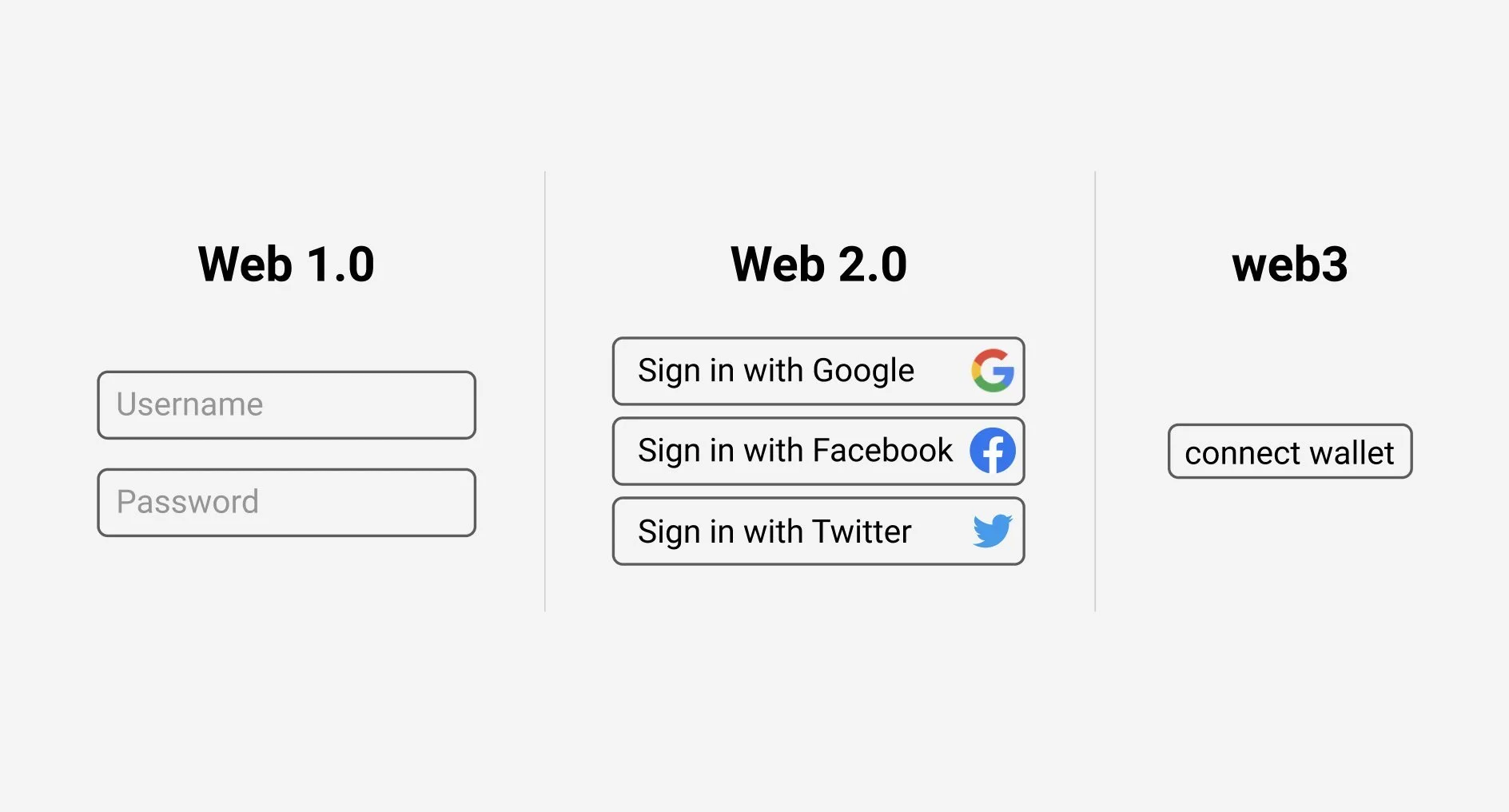
What is MetaMask?
Metamask is the most popular wallet extension and the gateway to the Ethereum ecosystem of dApps. This is a simple browser extension that can be added to Google Chrome or Mozilla Firefox. Users will not be asked any private or personal information, but be given a security phrase that can never be recovered. It’s important to write down your wallet security phrase in an important place, because it can never be retrieved. Each wallet has a unique address that allows users to buy, send, or swap cryptocurrency or tokens.
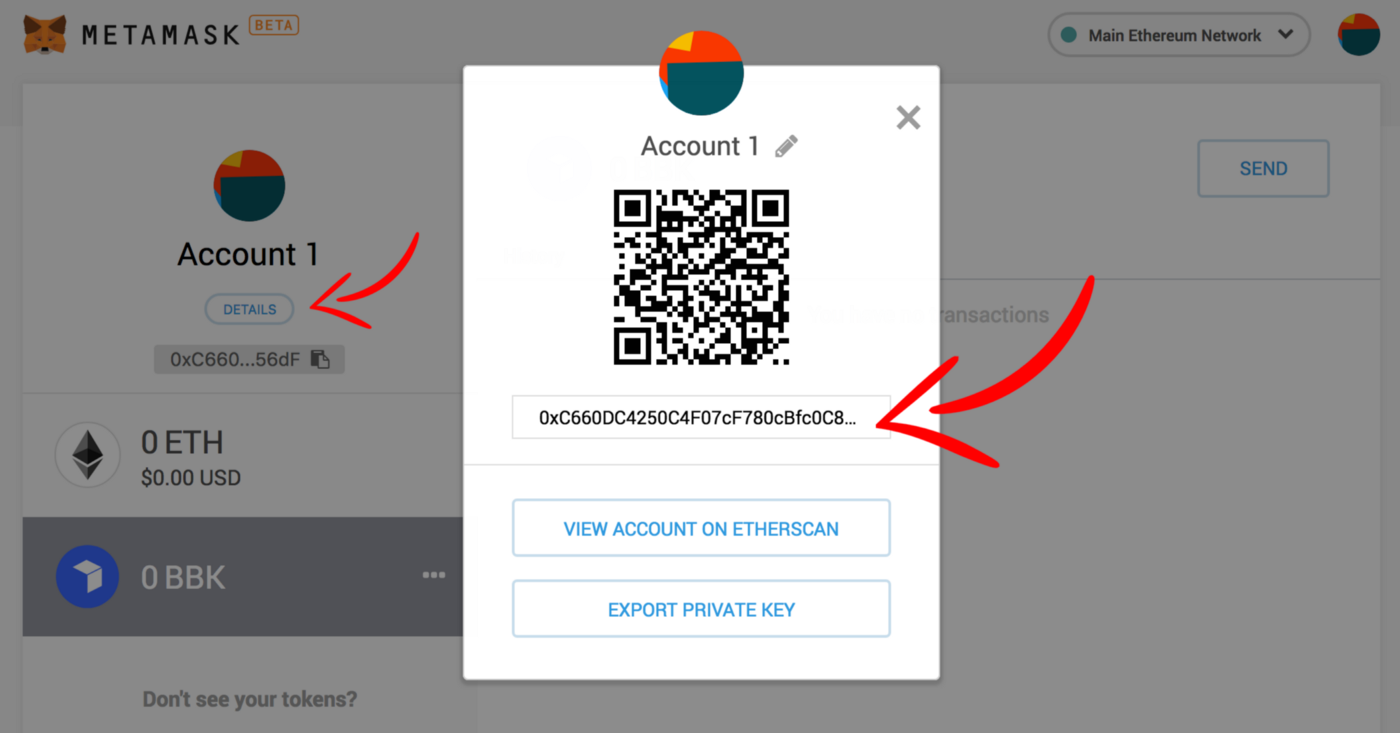
Example of unique wallet address.
How do I buy cryptocurrency?
You will need to use an exchange service to convert your USD to the particular cryptocurrency of your choosing. The most popular currently are Coinbase and Binance. When you sign up for these (free) services, you can link your bank account so that you can purchase cryptocurrency, while also converting crypto back to USD to be sent back to your bank. This is considered your “trader account”, and it will also be assigned a unique address similar to your wallet address. You will need to buy and convert any cryptocurrency you intend to work with here first, before transfering it to your wallet.
Please understand that certain wallets and exchanges do not work with each and all types of cryptocurrency, nor are they always interchangable. Research your intentions ahead of time before buying or transfering cryptocurrency, to ensure that you don’t accidentally lock up your assets with a faulty transaction. Sending small test amounts is a good way to ensure that you are sending it to a valid address.
What is staking?
Staking is the process of locking up your assets in an exchange for rewards, similar to earning interest. Many crypto wallets allow you to delegate your assets to a node for staking, earning up to 12% APY. This is a good way to make a passive income with your cryptocurrency while holding onto it for the long-term.
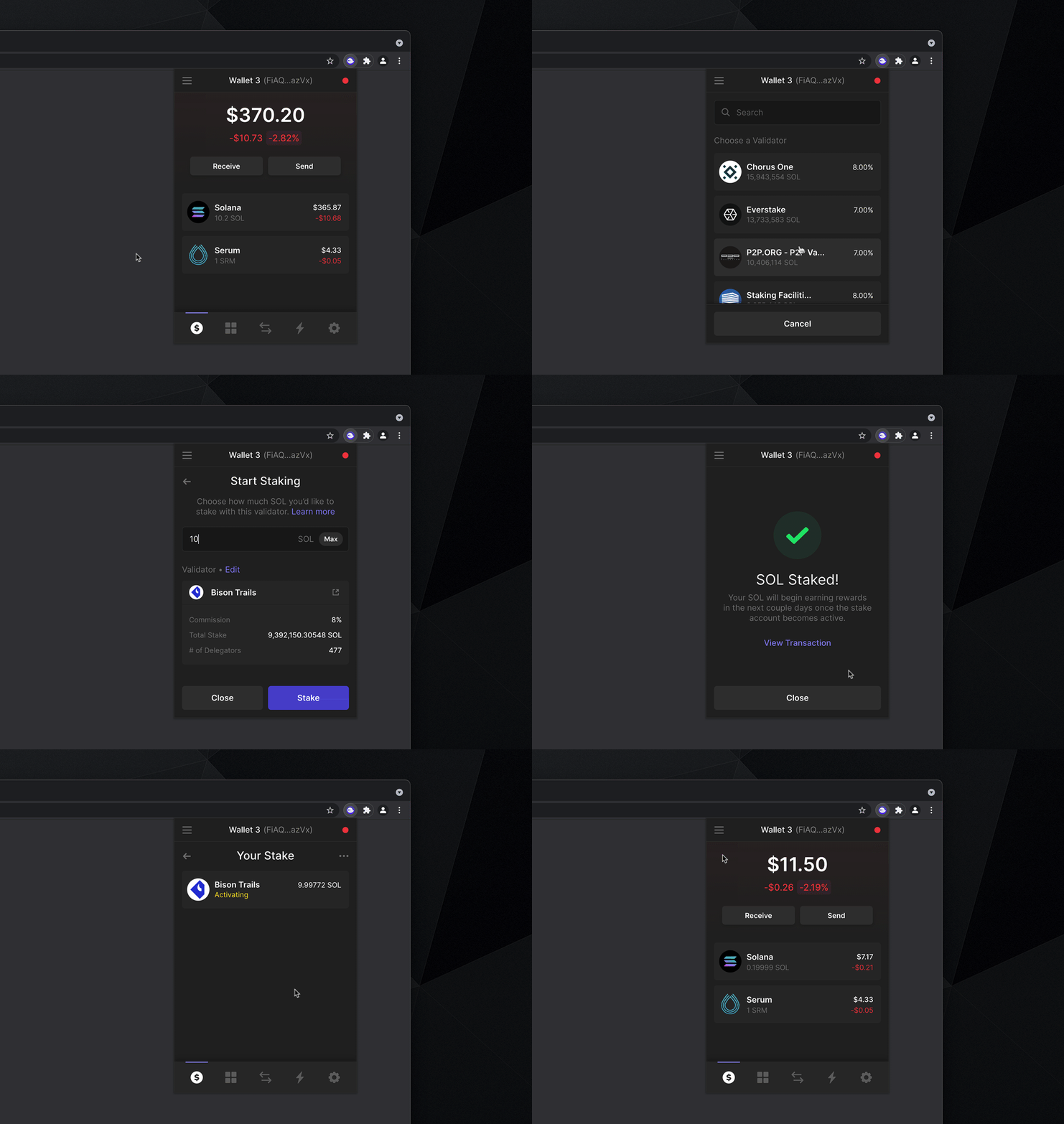
Staking cryptocurrency is a simple process that can offer high interest returns.
What is DeFi?
Decentralised Finance is a term that refers to financial applicables that are accessible through cryptocurrency. Users can lend their funds and earn interest, or borrow money against their holdings. This is the new era of financing, a hybrid between traditional banking loans and kickstarter. This allows early adopters and investors to become part owners in web3 projects or real world business ventures.
What is a DAO?
Decentralized autonomus organizations are becoming one of the most impactful and influental forces in the Web3.0 space. These entities act with no central leadership, and decisions are made from the bottom up, governed by a community organized around a specific set of rules enforced by the blockchain. A DAO works without hierarchical management, allowing a collective of members to essentially own the orgnization.
What does this mean for Spokane?
As government and progressive citys around the world continue to embrace and adopt cryptocurrency, it’s likely that Spokane will be slow to adopt such technologies. NFT galleries are starting to create an uproar in the art scene of major forward thinking metropolis areas. Major brands such as Nike and McDonalds are launching NFT initiatives, while Facebook prepares their metaverse to compete with decentralized VR experiences. The acceptance of cryptocurrency as payment is becoming more prevelant online, and is coming soon to local retailers as an acceptable form of tender.
Spokane brands will need to recognize this shift, and they will need partners in the web3 space to evolve and stay relevant. A new era of marketing will be ushered in, where utility on the blockchain becomes paramount over targeted marketing advertisements. A level of concern should be shared throughout the Spokane community, as embracing web3 could potentially help the city evolve both economically and socially.
Kinetek Media is currently working to build Web3 based applications, as well as create marketing solutions for Spokane based brands in the web3 future. Kinetek Media would like to help facilitate anyone wanting to learn how to create their own NFTs by creating a streamlined onboarding and minting process. If you have any questions about Web3 and how it will effect your Spokane based business, feel free to reach out to Miles Bergsma or anyone at the Kinetek Media team.
Kinetek Media is looking into the future of web3 and how it will effect traditional marketing.

Waterfall hikes near Spokane, WA
Waterfall hikes near Spokane, Washington
Looking for waterfall hikes near Spokane, Washington?
Check out my new website: NorthwestWaterfalls.com
Here are all of the public waterfall hikes and paddles within a few hours of Spokane, WA.
Please respect local lands! Always come prepared and check weather conditions ahead of time. Be safe!






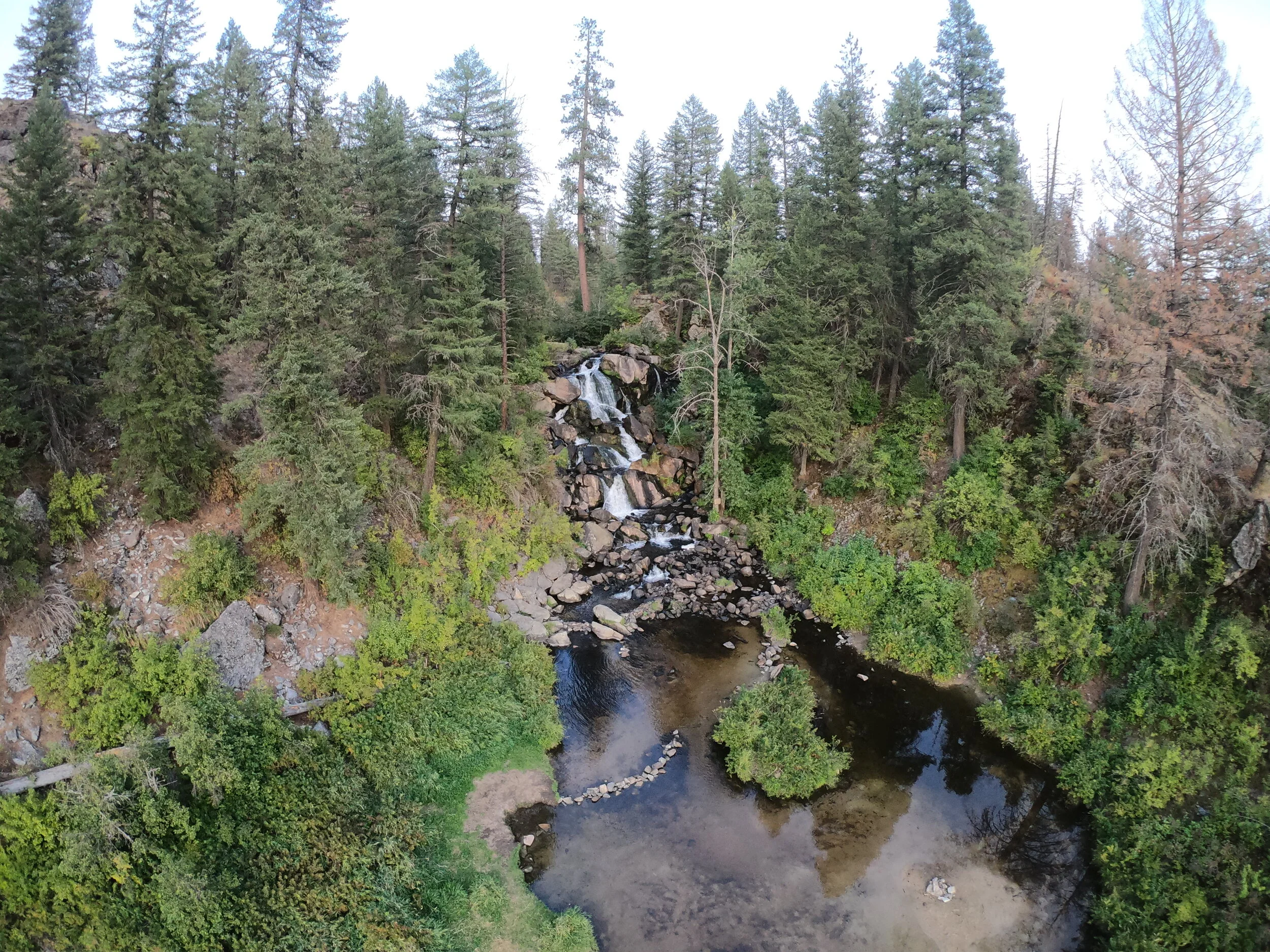
Exley Falls (Horseshoe Lake)




Lion Creek Falls




Liberty Lake Falls (not my photo)

Grouse Creek Falls (not my photo)

Towell Falls (not my photo)

Get Outside! Family Friendly hikes near Spokane, WA
The question I get asked the most - Where is a good place to take my kids hiking near Spokane?
Here are some great locations to take your kids outside and enjoy nature. These hikes are in no particular order, and I will share my personal insights from the adventures my kids and I have had on these trails. This is a great opportunity to teach your kids about outdoor ethics, while still having fun. Please respect the trail rules and pick up after your pets, and I highly encourage you to bring a garbage bag to help pick up litter. This can become a fun activity for kids, especially if you make it a contest or prize for who can collect the most!
For those of you that are new to hiking, I highly recommend downloaded the app AllTrails. It’s great for getting directions to the trailhead, GPS trail maps so you don’t get lost, distance and elevation statistics, as well as recent trail reviews. Trail reviews are a great way to see if the trail is muddy, icey, or closed. Always check the weather and plan ahead. Always bring water, food and snacks, as well as a first aid kit (with bee sting aid) in your car.
(TIP: Use Locations/Geotags on Instagram to find most recent conditions. Search for the Location/Geotag of the place you plan to visit. Look at the most ‘recent’ posts. You can likely see what conditions looked like within the last few days. If no one has posted in that location in 3-4 month’s, it’s likely the access road is closed due to snow. )

“Big Rock” seen while hiking from the Stevens Creek trailhead.
Click Here: Directions to Trailhead
Rocks of Sharon is my go to hike with the kids, since I live in the southern part of Spokane Valley. With it only being about 15 minutes away, it’s a great place for an evening hike to catch a sunset overlooking the Palouse or Spokane Valley.

Stevens Creek Trail in the winter.
Be careful hiking here during the winter and early spring months. The trail tends to get compacted with ice and will often times stay muddy until April.
This short hike (1 mile to the top) offers sweeping views in every direction. The short quick incline (~600ft.) is great for those who are trying to get in a quick workout, without going too far from home. There are several rock outcroppings at the peak of the hike, a great place to stop and have lunch or enjoy the views. This is also a local hangout for rock-climbers, scaling the face of “Big Rock”, which can be really entertaining for the kiddos in the summer months.

Sweeping views looking over the Palouse from the top of Rocks of Sharon.
2. Deep Creek Loop Trail - 9-Mile Falls Area

The Deep Creek trail system features paved sections of the centennial trail.
Click Here: Directions to Trailhead
The deep creek trail system is an extensive network of trails on the north end of Riverside State Park, near the community of Nine Mile Falls. Although I had hiked in Riverside State Park several times, I was amazed at how unique the landscape is through this particular trail in the deep creek canyon. My kids love the towering basalt talus rocks that you must weave up through to reach the top. The landscape really makes you feel small, and has a number of unique features that differ from other areas of the park. After starting along the centennial trail, you’ll find a unique bridge where “deep creek feeds into the Spokane River. Deep creek has now diminished to a trickle, due to irrigation needs from upstream. After checking out the bridge and sandy beach, you will want take a sharp turn to head upwards into on a rocky trail. This will take you up into a mossy canyon that will reveal all sorts of amazing wonders.
I recommend the shorter 2.3 mile loop for hikes with young kids, although there is a 5.4 mile loop if you’re really looking to induce a good nap time. The return back through the woods offers great views of the Spokane River area and allows for varied landscapes through out the entire hike.